The #1 Safety Feature to Look for in a Martial Arts School
When parents shop for a martial arts school, they often compare styles, schedules and prices. Those all matter. But if you only check one thing, check this: who is teaching, and how well they know what they’re doing.
Safety feature #1: the instructor
The single biggest factor in a safe martial arts experience is the experience and education of the instructor.
A well-trained instructor:
- Understands how bodies move. They know what a child’s joints can handle at five, at ten and at fifteen, and what an adult beginner needs.
- Teaches good form from day one. Bad habits in a kick or a fall can cause injuries now and joint problems years from now. Good teaching prevents both.
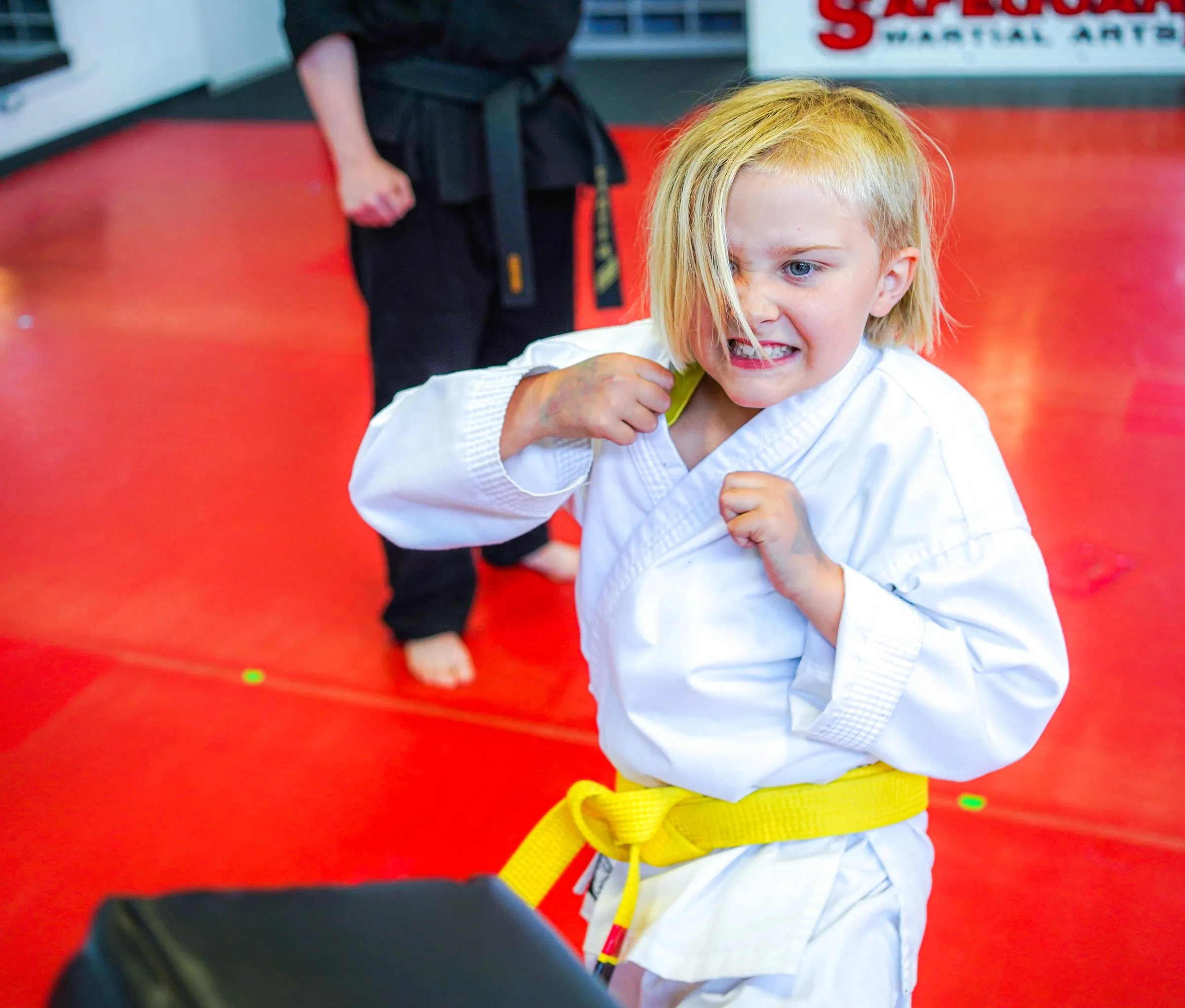
- Matches drills to age, size and belt. Partner work should always be supervised and appropriate for both partners.
- Reads the room. A good instructor notices the tired kid, the frustrated kid and the kid who’s about to try something they’re not ready for.
At Safeguard, classes are led by Sensei Troy Parker, a 4th-degree black belt who has trained since he was four years old in Shotokan karate, kickboxing, Brazilian jiu-jitsu and XMA weapons.
Safety feature #2: the floor
Right behind the instructor comes the surface you train on. Martial arts involves a lot of jumping, kicking, stepping and falling, usually barefoot. Doing that on hardwood, thin carpet or concrete is hard on the body.
On an unpadded floor, students are more likely to get sprains, strains and bruises in the short term. Over years, repeated impact can contribute to chronic joint, back and neck problems.
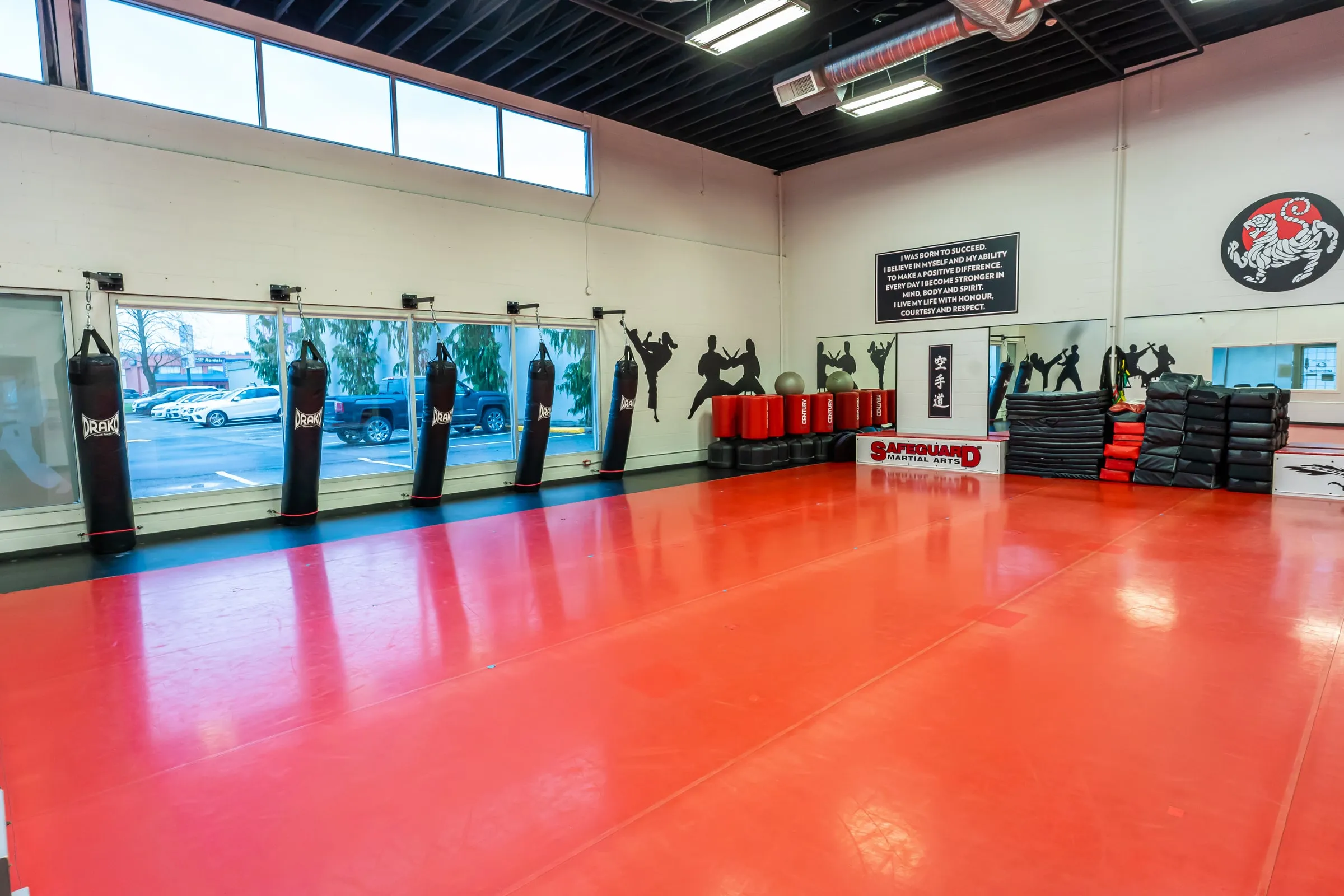
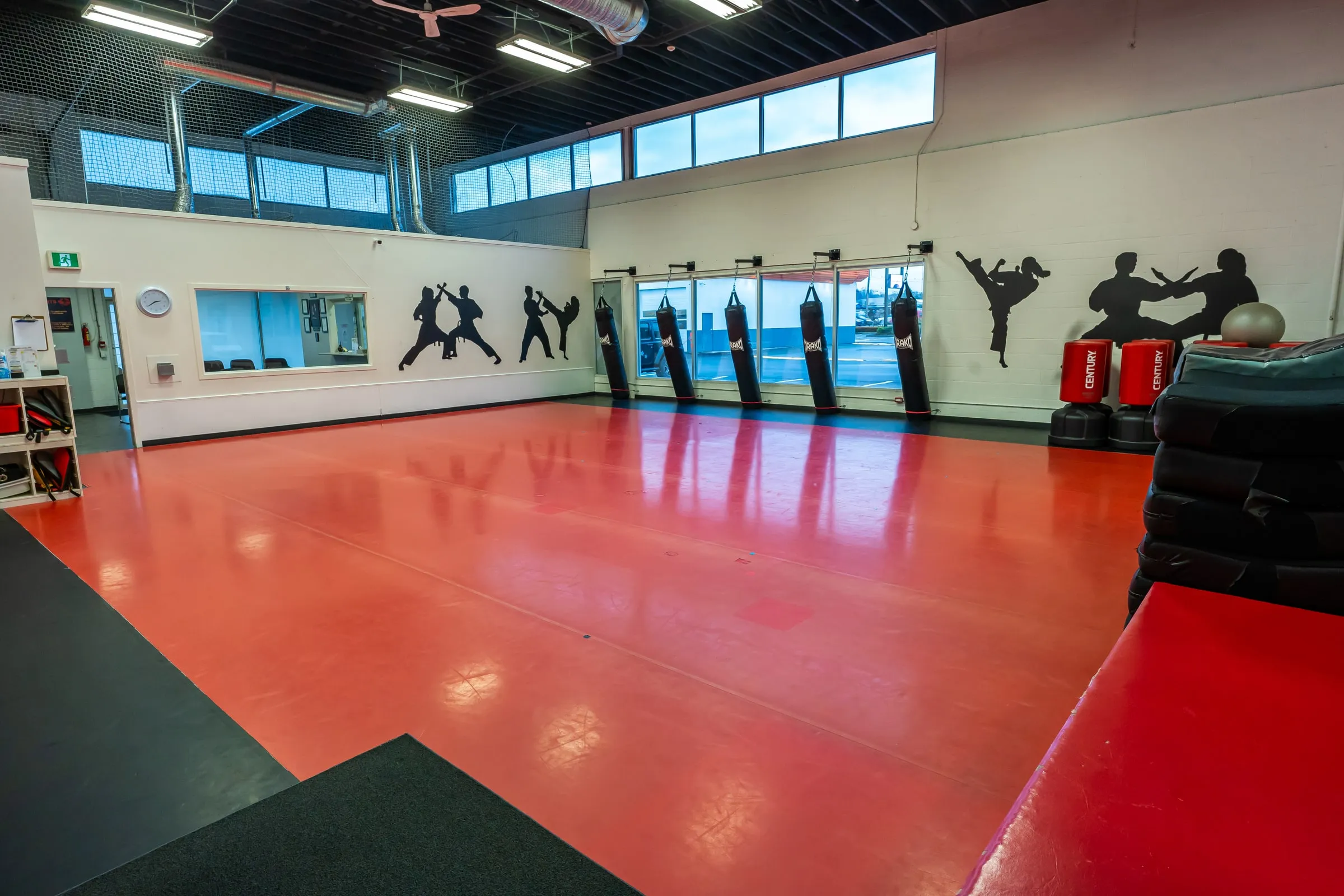
A properly padded floor absorbs that shock. Training is more comfortable, falls are safer, and students can keep enjoying martial arts for decades. Our entire training floor is covered in padded mats.
Other things to look for
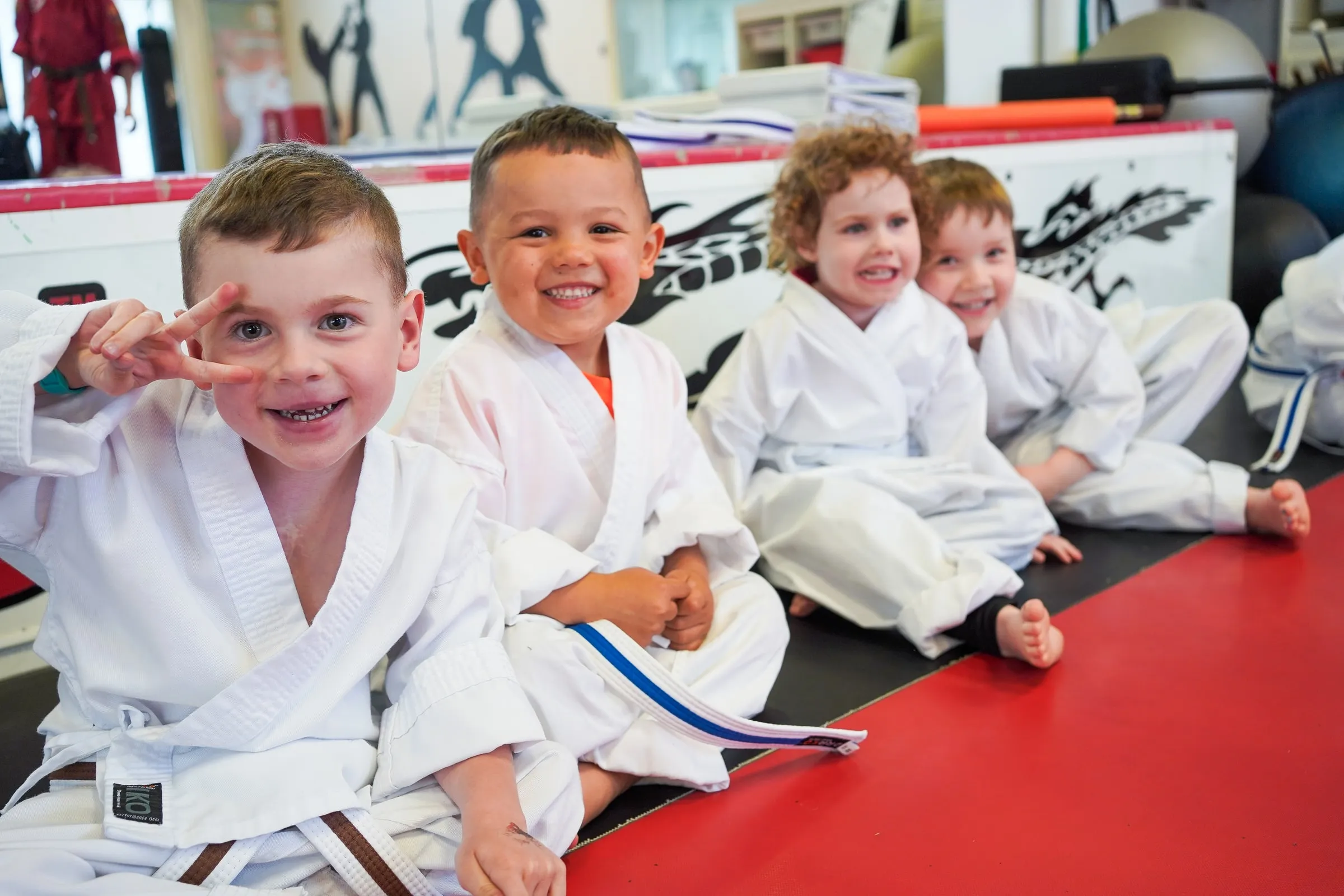
- Age-appropriate classes, so little kids aren’t training alongside teenagers
- Protective gear for activities like kickboxing. Our kickboxers wear gloves and shin guards
- Clear class structure, with a proper warm-up and cool-down
- A viewing area, so parents can see exactly what’s happening. Ours looks right onto the mat
- No pressure to spar. Partner work should be controlled and never forced
Questions to ask on a visit
- Who teaches the classes, and what’s their training?
- Is the whole training area padded?
- How are classes split by age and level?
- How is sparring or partner work supervised?
- Can I watch a class first?
A good school will be happy to answer all of them. To see how we approach it, come and watch, or book a trial class. You can also read our tips on how to choose a martial arts school for your child.
Our programs run from Tiger TOTS for ages 3 and 4, through Junior Karate, up to teen and adult classes for ages 13 and up. Every one of them is taught with safety first.