
How Long Does It Take to Get a Black Belt?
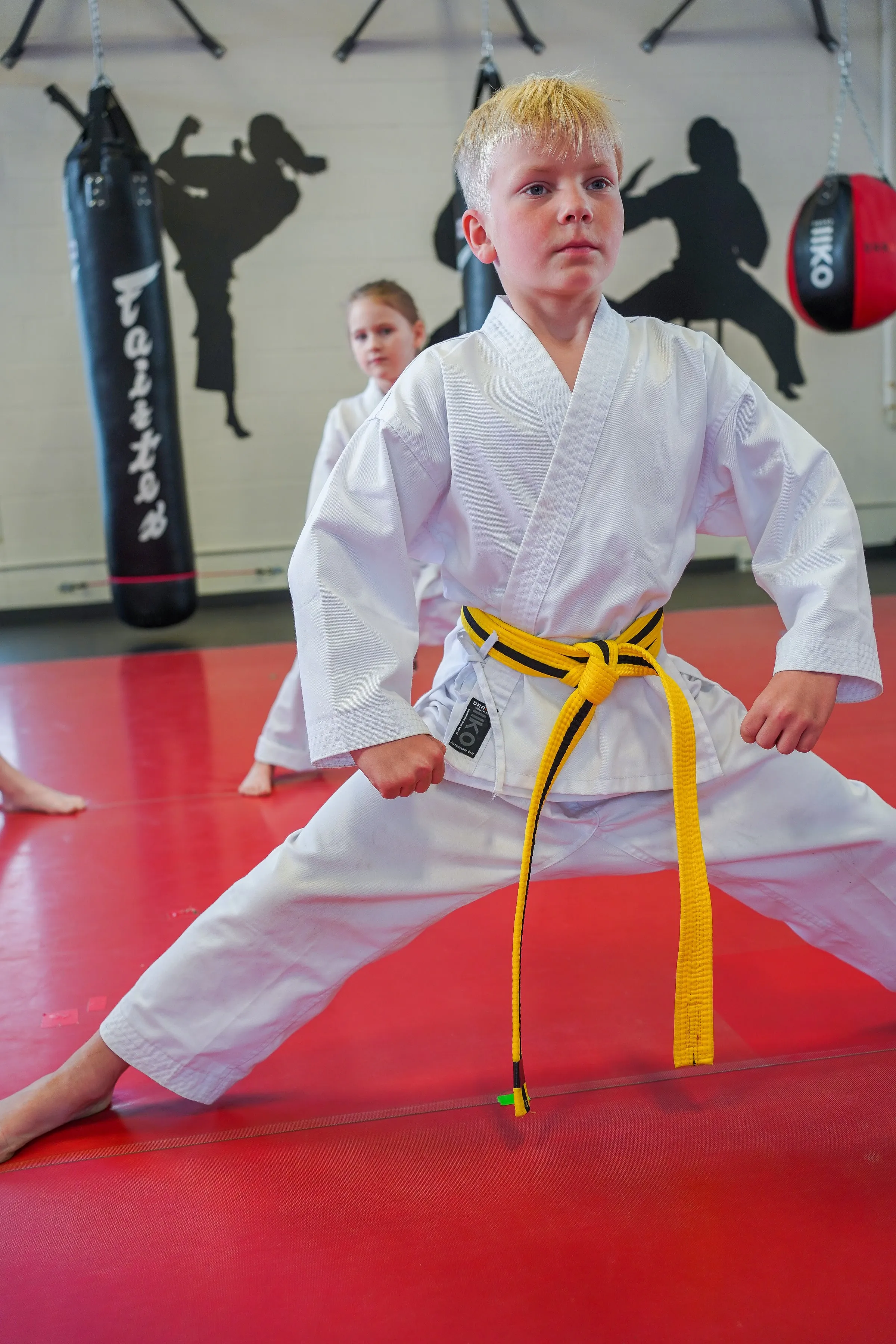
“How long until I get my black belt?” It’s the question we hear most, from kids and adults alike. The honest answer is years, and the exact number depends on you. Here’s how belts work, where they came from, and why we think the wait is the point.
Where the belt system came from
You may have heard the story that karate once had a single white belt that slowly turned black with years of sweat and dirt. It’s a lovely story, but historians don’t think it’s true.
The ranking system we use today comes from Jigoro Kano, the founder of judo, who started awarding black belts in the 1880s. When Gichin Funakoshi, the founder of Shotokan karate, brought karate to mainland Japan, he adopted Kano’s system and awarded the first karate black belts in the 1920s. The coloured belts in between came later, to give students milestones on the long road from white to black.
Either way, the meaning is the same: the belt shows experience, and experience takes time.
So how long does it take?
There’s no fixed timeline at Safeguard. Students move to their next belt when they’re ready, not when a calendar says so. What affects the pace:
- How often you train. Two classes a week is the steady path for most students.
- Practice between classes. Five minutes of kata in the living room adds up.
- Age and maturity. Young kids learn quickly, but a black belt asks for control and judgement that take time to grow.
- Effort and attitude. Showing up is the start. Working hard once you’re there is what moves you forward.
For many students, black belt is a decade-long journey, and some take longer. That’s not a problem. It’s what makes the belt worth having.
How our belts are structured
Students start at white belt and move through yellow, orange, green, purple, blue and brown belts on the way to black. Those eight belts fall into four groups: beginner ranks (white and yellow), intermediate ranks (orange and green), advanced ranks (purple and blue) and master ranks (brown and black). Along the way students earn stripes, which mark smaller wins between belt tests. You can see how the stages build on each other on our belt system page.
Belts here are earned, never handed out. A student tests for their next belt when Sensei Troy sees they’re ready, and the test means something because not everyone passes on the first try.
Be careful of “black belt factories”
If a school promises your seven-year-old a black belt in two years, ask what that belt actually means. Black belt is supposed to show years of technique, character and self-control. Not all black belts are equal, and the ones handed out quickly don’t carry much weight, on the mat or off it.
What you get along the way
Long before black belt, students gain the things most families actually came for:
- A real skill that lasts for life
- Practical self-protection
- Self-discipline and focus
- Confidence they earned
- Strength, flexibility and fitness
And when you do tie on a black belt, you’ll find it isn’t the finish line. It’s the beginning of the next stage of your training.
If you’re ready to start the journey, the first step is a trial class. Every black belt started with one.