Our Belt System, Explained: From White Belt to Black Belt
Belts are the part of martial arts everyone recognizes. They’re also easy to misunderstand. At Safeguard, a belt isn’t a reward for time served or a fee paid. It’s a sign that a student has grown, in skill and in character. Here’s how our system works.
The stages
Every student starts at white belt. From there, the path runs through eight belts in this order: white, yellow, orange, green, purple, blue, brown and black. We group them into four ranks:
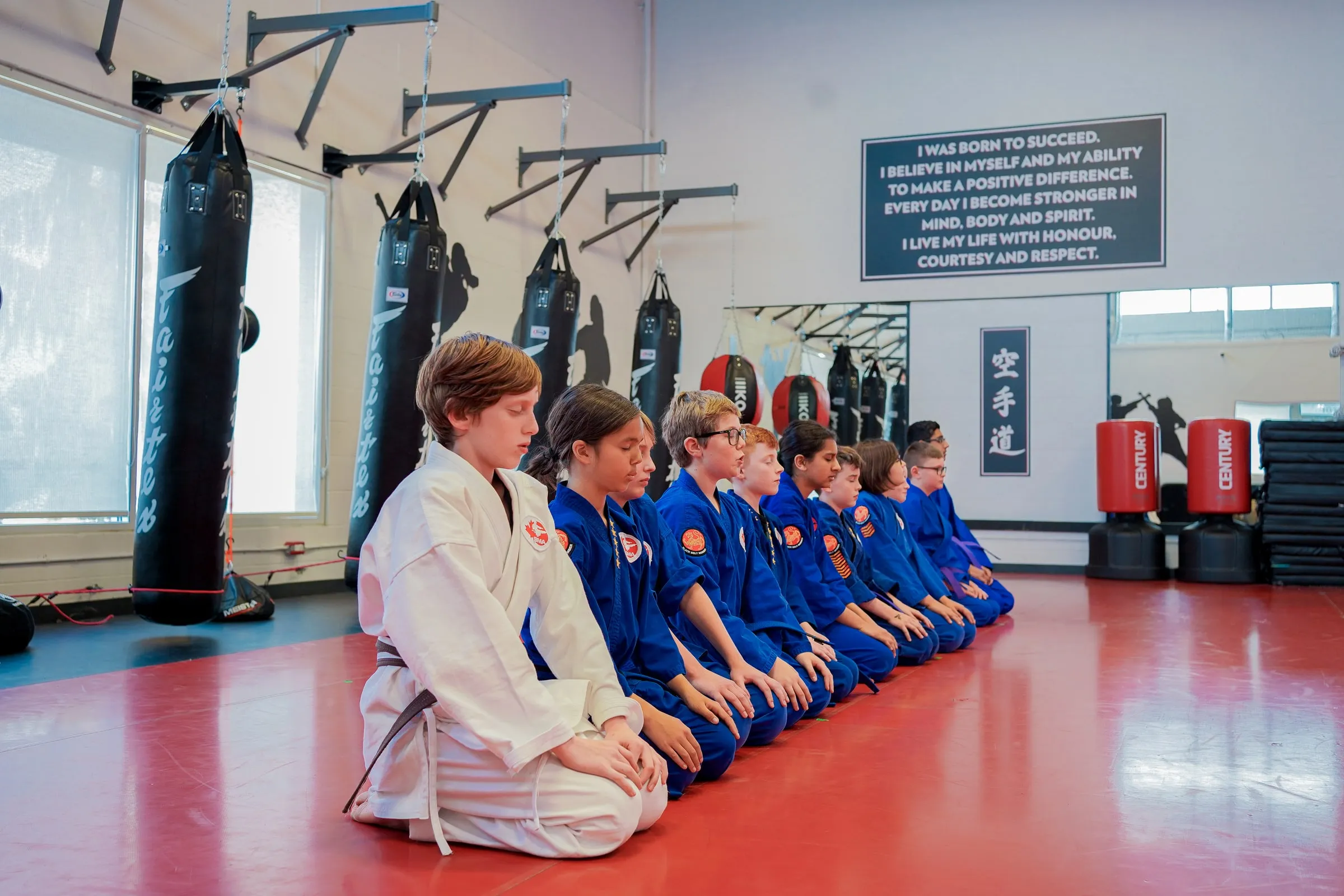
- Beginner ranks (white and yellow). Stances, punches, kicks and blocks, plus the habits of a good student: listening, bowing in and trying again.
- Intermediate ranks (orange and green). Combinations, first kata, real self-defence and sparring basics. Partner drills begin.
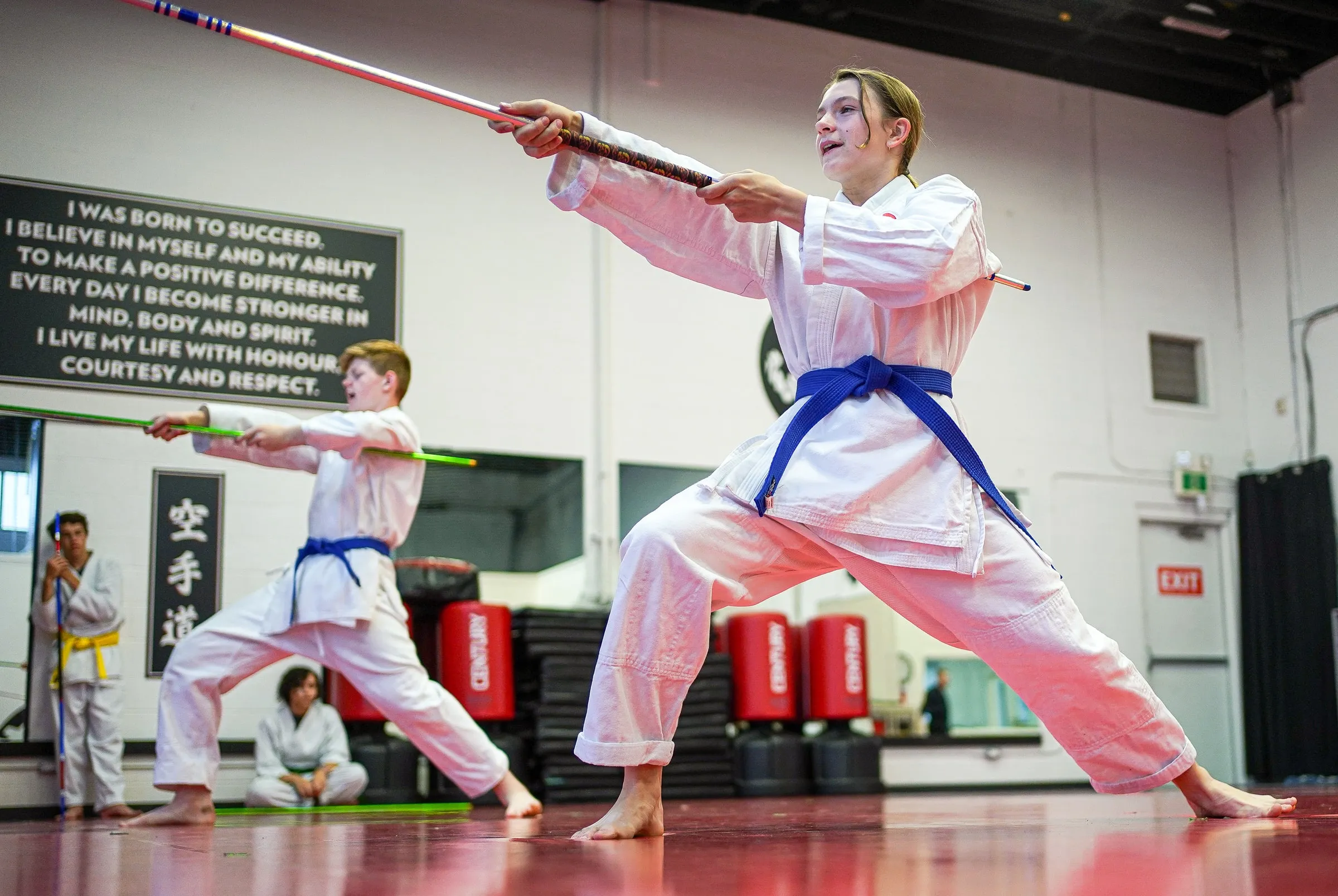
- Advanced ranks (purple and blue). Power, precision and advanced kata. Advanced students help lead warm-ups and support newer students.
- Master ranks (brown and black). Years of training come together in preparation for the black belt test.
Between belts, students earn stripes. Stripes mark smaller wins and give kids a goal they can reach in weeks, not months.
What we look for
Before a student tests for their next belt, we look at more than technique:
- Time invested. Skills need repetition to become reliable. There are no shortcuts.
- Effort. Are they giving their best in class, not just showing up?
- Resilience. How do they handle a tough drill, a correction or a bad day?
- Attitude and respect. How do they treat their partners, younger students and instructors?
- Dedication to the art. Are they practising, asking questions and taking ownership of their training?
A student tests when Sensei Troy sees they’re ready. Sometimes that means waiting a little longer than they hoped. That wait teaches patience, and it makes the belt mean more when it comes.
Why we don’t focus on belts
It might sound strange from a karate school, but belts aren’t the goal. The goal is what students become on the way:
- Able to protect themselves
- More self-disciplined
- More confident
- More focused
- Stronger and fitter
The belt simply marks the progress. That’s why ours are earned, never handed out, and never sold.
How long does it take?
For many students, black belt is a journey of a decade or more, and that’s normal for traditional Shotokan karate. We cover the history of belts and what affects the timeline in how long it takes to get a black belt.
Start at white belt
Every black belt in our dojo started exactly where you would: at white belt, in a trial class, a little nervous. Our karate programs for ages 5 to 7, 8 to 12 and 13 and up all start with a free 2-week trial of 4 classes. The journey begins with the first bow.